I'm participating in the ranking.Please click and cheer for me.
![中国共産党の経済買収]() The Chinese Communist Party's economic takeover - dependence on the Chinese economy is the same as being taken over - young people with no vested interests are the key.
Xi Jinping's strategy
Will peaceful dialogue be possible
Reach for any target
Taiwan was one step away from unification
At the 110th Anniversary of the Xinhai Revolution, President Xi Jinping cited the "One China" principle and the "1992 Consensus" based on it, and stated that the two countries would "promote the peaceful development of cross-strait relations." This is a worrisome statement, considering that he will never do the right thing in terms of Taiwan policy. On October 4, a record 56 Chinese aircraft entered Taiwan's airspace. Since the beginning of October, there have been a total of 149 airspace intrusions, but by the 5th, this had dropped sharply to just one aircraft.
Biden has called for peaceful dialogue with democratically elected leaders, but the issue remains focused on Taiwan's next presidential election. If Taiwan's next president becomes pro-China and moves toward unification with China, the United States will not interfere as long as the conclusion is reached through peaceful dialogue. It also means.
Direct bribery of politicians seems like something out of a TV drama, but China's strategy is much more elaborate. Communist Party members are reaching out to politicians' families, relatives, friends, politicians' support bases, and organizations.
If politicians' supporters were given huge amounts of wealth through business with China, they would easily turn over, and they would sniff out cheating, traffic accidents, tax evasion, minor legal violations, etc. of the politicians themselves and those around them. Collect information. To do this, they will use all sorts of methods, including hacking and wiretapping communication devices, and installing mechanisms to send information to the Chinese Communist Party into the communication devices themselves.
Before President Tsai Ing-wen, the era of President Ma Ying-jeou was one step closer to unification. Young people's votes played a key role in President Tsai Ing-wen's re-election. The key to the next election will be how to encourage young people, who have fewer business interests and other interests, to vote.
The Chinese Communist Party's economic takeover - dependence on the Chinese economy is the same as being taken over - young people with no vested interests are the key.
Xi Jinping's strategy
Will peaceful dialogue be possible
Reach for any target
Taiwan was one step away from unification
At the 110th Anniversary of the Xinhai Revolution, President Xi Jinping cited the "One China" principle and the "1992 Consensus" based on it, and stated that the two countries would "promote the peaceful development of cross-strait relations." This is a worrisome statement, considering that he will never do the right thing in terms of Taiwan policy. On October 4, a record 56 Chinese aircraft entered Taiwan's airspace. Since the beginning of October, there have been a total of 149 airspace intrusions, but by the 5th, this had dropped sharply to just one aircraft.
Biden has called for peaceful dialogue with democratically elected leaders, but the issue remains focused on Taiwan's next presidential election. If Taiwan's next president becomes pro-China and moves toward unification with China, the United States will not interfere as long as the conclusion is reached through peaceful dialogue. It also means.
Direct bribery of politicians seems like something out of a TV drama, but China's strategy is much more elaborate. Communist Party members are reaching out to politicians' families, relatives, friends, politicians' support bases, and organizations.
If politicians' supporters were given huge amounts of wealth through business with China, they would easily turn over, and they would sniff out cheating, traffic accidents, tax evasion, minor legal violations, etc. of the politicians themselves and those around them. Collect information. To do this, they will use all sorts of methods, including hacking and wiretapping communication devices, and installing mechanisms to send information to the Chinese Communist Party into the communication devices themselves.
Before President Tsai Ing-wen, the era of President Ma Ying-jeou was one step closer to unification. Young people's votes played a key role in President Tsai Ing-wen's re-election. The key to the next election will be how to encourage young people, who have fewer business interests and other interests, to vote.
![台湾が国連を脱退した]() The day Taiwan withdrew from the UN ~ Still unable to rejoin | Will anything happen with the return of the Trump administration?
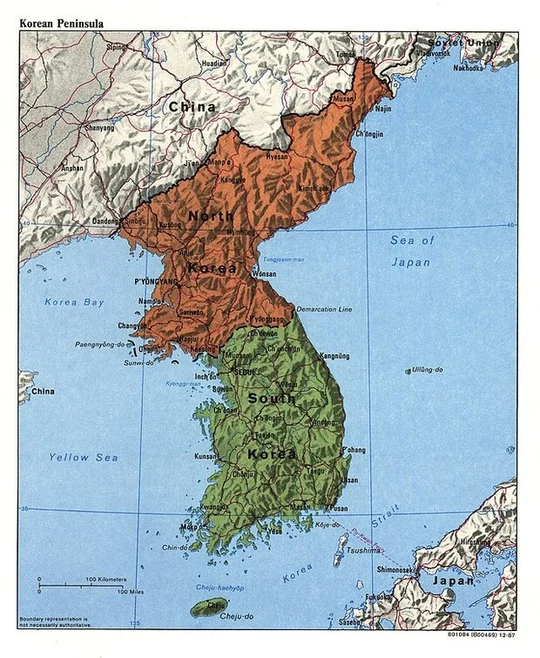
Japan does not recognize North Korea as a state, but there are 151 countries that do, and North Korea is also a member of the United Nations. For this reason, the Japanese Ministry of Foreign Affairs lists the number of countries in the world as 196, excluding North Korea, but in certified textbooks, it seems to be written as 197, including North Korea, considering that North Korea is a member of the United Nations. The difference with Taiwan is the number of countries that recognize it as a state and whether it is a member of the United Nations or not.
Currently, there are 13 countries that recognize Taiwan as a state, and Taiwan is not a member of the United Nations. The fact that there are 13 countries that recognize Taiwan as a state means that Taiwan is a country for those 13 countries, and that they have embassies and diplomatic relations. So what about the fact that it is not a member of the United Nations?
Currently, there are 195 countries that Japan recognizes as states, and among them, the Vatican, Kosovo, Cook Islands, and Niue are not members of the United Nations. However, Japan has diplomatic relations with them and officially recognizes them as states. In that case, whether or not a country is a member of the United Nations does not determine whether it is a country or not, but rather seems to depend solely on whether or not countries recognize it as a country. How is a country defined internationally? This is shown in the 1933 "Montevideo Convention," which lists the following requirements for statehood: 1. Permanent population, 2. Clear territory, 3. Government, and 4. Ability to have relations with other countries.
Looking at Taiwan, it is considered to meet all of the requirements of this treaty. There are 13 countries with which it has diplomatic relations, and it seems that how to evaluate the ability to have relations with other countries is a question, but this is largely due to the fact that China is hindering it internationally and it cannot establish diplomatic relations. Considering the national requirements shown in the Montevideo Convention, Taiwan meets the national requirements and is recognized as a country by 13 countries, and the reason this number does not increase is because of interference from China, and it cannot join the United Nations for the same purpose. It would be correct to see it this way.
The UN membership conditions require the approval of 9 of the 15 council members, and if even one of the permanent members opposes, the recommendation for membership cannot be made, so as long as China is a permanent member, it will not be possible for Taiwan to join the UN. So has Taiwan never been able to join the UN? Not at all. It's strange that it's not often mentioned in Japan, but Taiwan was a permanent member of the UN.
At the end of the war, Japan accepted the Potsdam Declaration, but the countries listed as counterparts were the United States, the United Kingdom, and the Republic of China. This is the Republic of China in Taiwan today. After the war, the United Nations was established in 1945, and the Republic of China, led by Chiang Kai-shek, was the permanent member at that time. After the war, Chiang Kai-shek returned to Nanjing and established a constitution, but the second Chinese civil war began. In 1949, the People's Republic of China declared its founding with Beijing as its capital, and the Republic of China resisted but continued to be defeated, and in December of the same year, it moved its capital to Taiwan. At this time, the Republic of China in Taiwan was still a permanent member of the United Nations. This situation continued for 22 years until 1971. For 26 years since the establishment of the United Nations, the Republic of China was a permanent member.
So what happened in 1971? The United Nations' Albanian Resolution was proposed. This is a resolution on China's representation submitted jointly by 23 countries, including Albania, which has a close relationship with the People's Republic of China. The resolution called for the People's Republic of China, which effectively controls mainland China, to be recognized as the representative government of China, and for the expulsion of the Republic of China from the United Nations. After some twists and turns, the resolution was changed from expulsion of the Republic of China to expulsion of Chiang Kai-shek's representative.
This resolution was a dispute over which government was the legitimate permanent member of the UN, and passed with 76 votes in favor, 35 against, 17 abstentions, and 3 absent. Japan persuaded Chiang Kai-shek to stay in the UN, and submitted the "Resolution on Important Issues Against Expulsion" and the "Resolution on Dual Representation" jointly with the United States. The "Resolution on Important Issues Against Expulsion" stated that such matters related to UN seats are important matters, and should be decided by a two-thirds majority in accordance with Article 18 of the UN Charter, but this was rejected by a majority, and the "Resolution on Dual Representation" was never voted on after the Albanian resolution passed. This "Dual Representation Resolution" proposed that the People's Republic of China would be the permanent member of the Security Council, and the Republic of China would maintain the remaining seats.
Now, in protest against the passing of the Albanian Resolution, Chiang Kai-shek left the UN chamber, and the Republic of China withdrew from the UN. This was a form of voluntary withdrawal. Strictly speaking, the resolution itself was the expulsion of Representative Chiang Kai-shek from his seat, so it can be said that the path for the Republic of China to remain in the UN was left open. And the "One China Principle" that China is currently talking about was not recognized by this Albanian Resolution, but merely a vote by the representative government on one side or the other.
The UN has stated that no country has ever been expelled from the UN in the past. The conditions for suspension are written in Article 5 of the UN Charter, but it is unlikely that this issue of representation would conflict with this, so it is thought that the Albanian Resolution also changed the original wording of the expulsion of the Republic of China to the expulsion of Representative Chiang Kai-shek. Regarding whether this was the expulsion of the Republic of China or the expulsion of Representative Chiang Kai-shek, there are both in Japanese information, and the original text is published in the American document, which says it was the expulsion of Representative Chiang Kai-shek.
If you think about it this way, you can see that at that time, if Chiang Kai-shek had stepped down as the government representative, the Republic of China could have joined the United Nations as a separate country from the People's Republic of China. Of course, it is not realistic for Chiang Kai-shek to step down as representative. In 1947, the Republic of China was under a military regime that imposed martial law for 38 years from 1949, which was the exact opposite of the democratic model of Taiwan today, and the international community at the time questioned the country's national administration in that sense as well. This 38 years of martial law is said to be the longest in human history.
The Albanian Resolution is the basis for China's current claim that the international community supported the One China principle, but such a resolution has never been made. The US government has officially stated that the issue of representation has been resolved, but the issue of sovereignty over Taiwan has not.
However, since the People's Republic of China was recognized as an official permanent member of the UN, one country after another sought diplomatic relations with China, and in exchange, China sought to break off diplomatic relations with Taiwan. It applied pressure by hinting at the veto power of the permanent members. In this context, Japan established diplomatic relations with China in 1972, and the United States also established diplomatic relations thereafter. In return, it ended up breaking off diplomatic relations with Taiwan.
The important point is that the Albanian resolution decided which government would represent China, but the issue of sovereignty over Taiwan was not resolved here. The US government has also officially announced this. China claims that this resolution confirmed the One China principle.
The day Taiwan withdrew from the UN ~ Still unable to rejoin | Will anything happen with the return of the Trump administration?
Japan does not recognize North Korea as a state, but there are 151 countries that do, and North Korea is also a member of the United Nations. For this reason, the Japanese Ministry of Foreign Affairs lists the number of countries in the world as 196, excluding North Korea, but in certified textbooks, it seems to be written as 197, including North Korea, considering that North Korea is a member of the United Nations. The difference with Taiwan is the number of countries that recognize it as a state and whether it is a member of the United Nations or not.
Currently, there are 13 countries that recognize Taiwan as a state, and Taiwan is not a member of the United Nations. The fact that there are 13 countries that recognize Taiwan as a state means that Taiwan is a country for those 13 countries, and that they have embassies and diplomatic relations. So what about the fact that it is not a member of the United Nations?
Currently, there are 195 countries that Japan recognizes as states, and among them, the Vatican, Kosovo, Cook Islands, and Niue are not members of the United Nations. However, Japan has diplomatic relations with them and officially recognizes them as states. In that case, whether or not a country is a member of the United Nations does not determine whether it is a country or not, but rather seems to depend solely on whether or not countries recognize it as a country. How is a country defined internationally? This is shown in the 1933 "Montevideo Convention," which lists the following requirements for statehood: 1. Permanent population, 2. Clear territory, 3. Government, and 4. Ability to have relations with other countries.
Looking at Taiwan, it is considered to meet all of the requirements of this treaty. There are 13 countries with which it has diplomatic relations, and it seems that how to evaluate the ability to have relations with other countries is a question, but this is largely due to the fact that China is hindering it internationally and it cannot establish diplomatic relations. Considering the national requirements shown in the Montevideo Convention, Taiwan meets the national requirements and is recognized as a country by 13 countries, and the reason this number does not increase is because of interference from China, and it cannot join the United Nations for the same purpose. It would be correct to see it this way.
The UN membership conditions require the approval of 9 of the 15 council members, and if even one of the permanent members opposes, the recommendation for membership cannot be made, so as long as China is a permanent member, it will not be possible for Taiwan to join the UN. So has Taiwan never been able to join the UN? Not at all. It's strange that it's not often mentioned in Japan, but Taiwan was a permanent member of the UN.
At the end of the war, Japan accepted the Potsdam Declaration, but the countries listed as counterparts were the United States, the United Kingdom, and the Republic of China. This is the Republic of China in Taiwan today. After the war, the United Nations was established in 1945, and the Republic of China, led by Chiang Kai-shek, was the permanent member at that time. After the war, Chiang Kai-shek returned to Nanjing and established a constitution, but the second Chinese civil war began. In 1949, the People's Republic of China declared its founding with Beijing as its capital, and the Republic of China resisted but continued to be defeated, and in December of the same year, it moved its capital to Taiwan. At this time, the Republic of China in Taiwan was still a permanent member of the United Nations. This situation continued for 22 years until 1971. For 26 years since the establishment of the United Nations, the Republic of China was a permanent member.
So what happened in 1971? The United Nations' Albanian Resolution was proposed. This is a resolution on China's representation submitted jointly by 23 countries, including Albania, which has a close relationship with the People's Republic of China. The resolution called for the People's Republic of China, which effectively controls mainland China, to be recognized as the representative government of China, and for the expulsion of the Republic of China from the United Nations. After some twists and turns, the resolution was changed from expulsion of the Republic of China to expulsion of Chiang Kai-shek's representative.
This resolution was a dispute over which government was the legitimate permanent member of the UN, and passed with 76 votes in favor, 35 against, 17 abstentions, and 3 absent. Japan persuaded Chiang Kai-shek to stay in the UN, and submitted the "Resolution on Important Issues Against Expulsion" and the "Resolution on Dual Representation" jointly with the United States. The "Resolution on Important Issues Against Expulsion" stated that such matters related to UN seats are important matters, and should be decided by a two-thirds majority in accordance with Article 18 of the UN Charter, but this was rejected by a majority, and the "Resolution on Dual Representation" was never voted on after the Albanian resolution passed. This "Dual Representation Resolution" proposed that the People's Republic of China would be the permanent member of the Security Council, and the Republic of China would maintain the remaining seats.
Now, in protest against the passing of the Albanian Resolution, Chiang Kai-shek left the UN chamber, and the Republic of China withdrew from the UN. This was a form of voluntary withdrawal. Strictly speaking, the resolution itself was the expulsion of Representative Chiang Kai-shek from his seat, so it can be said that the path for the Republic of China to remain in the UN was left open. And the "One China Principle" that China is currently talking about was not recognized by this Albanian Resolution, but merely a vote by the representative government on one side or the other.
The UN has stated that no country has ever been expelled from the UN in the past. The conditions for suspension are written in Article 5 of the UN Charter, but it is unlikely that this issue of representation would conflict with this, so it is thought that the Albanian Resolution also changed the original wording of the expulsion of the Republic of China to the expulsion of Representative Chiang Kai-shek. Regarding whether this was the expulsion of the Republic of China or the expulsion of Representative Chiang Kai-shek, there are both in Japanese information, and the original text is published in the American document, which says it was the expulsion of Representative Chiang Kai-shek.
If you think about it this way, you can see that at that time, if Chiang Kai-shek had stepped down as the government representative, the Republic of China could have joined the United Nations as a separate country from the People's Republic of China. Of course, it is not realistic for Chiang Kai-shek to step down as representative. In 1947, the Republic of China was under a military regime that imposed martial law for 38 years from 1949, which was the exact opposite of the democratic model of Taiwan today, and the international community at the time questioned the country's national administration in that sense as well. This 38 years of martial law is said to be the longest in human history.
The Albanian Resolution is the basis for China's current claim that the international community supported the One China principle, but such a resolution has never been made. The US government has officially stated that the issue of representation has been resolved, but the issue of sovereignty over Taiwan has not.
However, since the People's Republic of China was recognized as an official permanent member of the UN, one country after another sought diplomatic relations with China, and in exchange, China sought to break off diplomatic relations with Taiwan. It applied pressure by hinting at the veto power of the permanent members. In this context, Japan established diplomatic relations with China in 1972, and the United States also established diplomatic relations thereafter. In return, it ended up breaking off diplomatic relations with Taiwan.
The important point is that the Albanian resolution decided which government would represent China, but the issue of sovereignty over Taiwan was not resolved here. The US government has also officially announced this. China claims that this resolution confirmed the One China principle.
![集団的自衛権は台湾有]() The right of collective self-defense assumes a Taiwanese emergency - Former Prime Minister Aso mentioned the possibility that an invasion of Taiwan would extend to the waters near the Senkaku Islands.
On July 5, former Prime Minister Aso gave a speech in Tokyo, stating that if China were to invade Taiwan, it would be recognized as an ``existence-endangering situation'' under national security-related laws, and the right of collective self-defense could be exercised to a limited extent. He acknowledged that it was possible. Currently, Japan does not recognize Taiwan as a state, so Taiwan itself is outside the scope of the right of collective self-defense, but both China and Taiwan claim territorial rights to the Senkaku Islands, and China has made an armed invasion of Taiwan. It can be interpreted to include the Senkaku Islands if a naval blockade of Taiwan is implemented.
Will the premise be that the right of collective self-defense will be exercised under the condition that the United States enters the war, or will the Japan-U.S. alliance be activated while Japan exercises its right of self-defense in the event of a naval blockade? Is it? The United States uses the name Taiwan as a military name. The Biden administration has announced that there will be no change in its interpretation of the One China Policy. On the other hand, Japan has confirmed that the defense of the Senkaku Islands falls within the scope of the Japan-US Security Treaty. Regarding the defense of Taiwan, although the U.S.-Taiwan Relations Act mentions the provision of weapons, it does not specify whether the U.S. military will be involved in the defense of Taiwan, leaving some ambiguity.
If China were to invade Taiwan, there is a possibility that Japan would join the war, assuming that the U.S. military would join the war.
Considering the meaning of Deputy Prime Minister Aso's remarks, it is unlikely that they will be put into action unless they include military exercises between Japan, the United States, and Taiwan. Without military exercises, there is no way that the right of collective self-defense would be accompanied by the power to implement it. This will be a major focus in the future. We may see the Self-Defense Forces entering Taiwan for military exercises.
The US military has announced that it is conducting joint military exercises with Taiwan. It is not possible to create an action plan without conducting military exercises on-site to determine what kind of operations could be carried out in the terrain and environment of Taiwan's west coast in the event of an actual battle. There needs to be a concrete discussion about what is necessary for Japan to exercise its right of collective self-defense.
In order to exercise the right of collective self-defense, the Self-Defense Forces will need military training that simulates the Taiwan Strait in order to function effectively.
The right of collective self-defense assumes a Taiwanese emergency - Former Prime Minister Aso mentioned the possibility that an invasion of Taiwan would extend to the waters near the Senkaku Islands.
On July 5, former Prime Minister Aso gave a speech in Tokyo, stating that if China were to invade Taiwan, it would be recognized as an ``existence-endangering situation'' under national security-related laws, and the right of collective self-defense could be exercised to a limited extent. He acknowledged that it was possible. Currently, Japan does not recognize Taiwan as a state, so Taiwan itself is outside the scope of the right of collective self-defense, but both China and Taiwan claim territorial rights to the Senkaku Islands, and China has made an armed invasion of Taiwan. It can be interpreted to include the Senkaku Islands if a naval blockade of Taiwan is implemented.
Will the premise be that the right of collective self-defense will be exercised under the condition that the United States enters the war, or will the Japan-U.S. alliance be activated while Japan exercises its right of self-defense in the event of a naval blockade? Is it? The United States uses the name Taiwan as a military name. The Biden administration has announced that there will be no change in its interpretation of the One China Policy. On the other hand, Japan has confirmed that the defense of the Senkaku Islands falls within the scope of the Japan-US Security Treaty. Regarding the defense of Taiwan, although the U.S.-Taiwan Relations Act mentions the provision of weapons, it does not specify whether the U.S. military will be involved in the defense of Taiwan, leaving some ambiguity.
If China were to invade Taiwan, there is a possibility that Japan would join the war, assuming that the U.S. military would join the war.
Considering the meaning of Deputy Prime Minister Aso's remarks, it is unlikely that they will be put into action unless they include military exercises between Japan, the United States, and Taiwan. Without military exercises, there is no way that the right of collective self-defense would be accompanied by the power to implement it. This will be a major focus in the future. We may see the Self-Defense Forces entering Taiwan for military exercises.
The US military has announced that it is conducting joint military exercises with Taiwan. It is not possible to create an action plan without conducting military exercises on-site to determine what kind of operations could be carried out in the terrain and environment of Taiwan's west coast in the event of an actual battle. There needs to be a concrete discussion about what is necessary for Japan to exercise its right of collective self-defense.
In order to exercise the right of collective self-defense, the Self-Defense Forces will need military training that simulates the Taiwan Strait in order to function effectively.
![台湾独立が台湾進攻の]() Mr. Xi Jinping believes that Taiwan's independence is the trigger for his invasion of Taiwan - The timing of Taiwan's independence and the influence of elections in each country.
The term of office of the Chinese president is five years. In 2018, China's National People's Congress lifted the 10-year limit for two terms, making it possible for candidates to be re-elected as many times as they like. Xi Jinping is currently in his second term, and his term ends in 2023. Regarding the timing, if any, of China's invasion of Taiwan, in January 2021, the Chinese Minister of Defense made in-depth statements that Taiwan's independence would mean war. At the recent U.S.-China summit, Xi Jinping said, ``If Taiwan's independence forces cross the line, we will take decisive measures.''
In other words, the timing is Taiwan's independence. So, regardless of what kind of action or state one considers independence, Taiwan satisfies all the substantive requirements for becoming a state under international law. All that remains is to draft a declaration of independence and declare it to the international community as an independent country. The question is at what timing it will be done.
Regarding this, President Tsai Ing-wen has stated that Taiwan is "already independent," indicating that she has no intention of drafting a declaration of independence. Taiwan's 2024 presidential election will be held the year after Xi Jinping begins his third term. The Democratic Progressive Party candidates advocate Taiwan's independence, which means that Taiwan is not yet independent, which is a very different nuance from President Tsai Ing-wen's ``already independent'' statement.
If the Democratic Progressive Party candidate becomes Taiwan's president in 2024, there is a high possibility that he will draft a declaration of independence during his term. Xi Jinping, aiming for a third term, will support the Kuomintang, the opposition force to Taiwan's ruling party, and seek to become Taiwan's president. Obsessed with elections. The Nationalist Party is a pro-China party. 2024 is also the year of the US presidential election. Based on President Tsai Ing-wen's idea that the country is "already independent," it is unlikely that a declaration of independence will be drafted under the Tsai Ing-wen administration or the Biden administration.
Taiwan's presidential election and the US presidential election will begin in 2024, and Xi Jinping's third term will begin in 2023. It will be interesting to see if there is any movement after this time.
Since the term of office of Taiwan's president is four years, the term of office of the next president will expire in 2028, which will be Xi Jinping's fourth term. Xi Jinping will need to see results by at least 2027 to be re-elected to a fourth term. This timing is the 6th year that Commander Davidson said that war would occur within 6 years. If the US Republican Party wins in 2024, the situation will change dramatically.
The timing of Taiwan's declaration of independence may have a great deal to do with the elections in the three countries.
Mr. Xi Jinping believes that Taiwan's independence is the trigger for his invasion of Taiwan - The timing of Taiwan's independence and the influence of elections in each country.
The term of office of the Chinese president is five years. In 2018, China's National People's Congress lifted the 10-year limit for two terms, making it possible for candidates to be re-elected as many times as they like. Xi Jinping is currently in his second term, and his term ends in 2023. Regarding the timing, if any, of China's invasion of Taiwan, in January 2021, the Chinese Minister of Defense made in-depth statements that Taiwan's independence would mean war. At the recent U.S.-China summit, Xi Jinping said, ``If Taiwan's independence forces cross the line, we will take decisive measures.''
In other words, the timing is Taiwan's independence. So, regardless of what kind of action or state one considers independence, Taiwan satisfies all the substantive requirements for becoming a state under international law. All that remains is to draft a declaration of independence and declare it to the international community as an independent country. The question is at what timing it will be done.
Regarding this, President Tsai Ing-wen has stated that Taiwan is "already independent," indicating that she has no intention of drafting a declaration of independence. Taiwan's 2024 presidential election will be held the year after Xi Jinping begins his third term. The Democratic Progressive Party candidates advocate Taiwan's independence, which means that Taiwan is not yet independent, which is a very different nuance from President Tsai Ing-wen's ``already independent'' statement.
If the Democratic Progressive Party candidate becomes Taiwan's president in 2024, there is a high possibility that he will draft a declaration of independence during his term. Xi Jinping, aiming for a third term, will support the Kuomintang, the opposition force to Taiwan's ruling party, and seek to become Taiwan's president. Obsessed with elections. The Nationalist Party is a pro-China party. 2024 is also the year of the US presidential election. Based on President Tsai Ing-wen's idea that the country is "already independent," it is unlikely that a declaration of independence will be drafted under the Tsai Ing-wen administration or the Biden administration.
Taiwan's presidential election and the US presidential election will begin in 2024, and Xi Jinping's third term will begin in 2023. It will be interesting to see if there is any movement after this time.
Since the term of office of Taiwan's president is four years, the term of office of the next president will expire in 2028, which will be Xi Jinping's fourth term. Xi Jinping will need to see results by at least 2027 to be re-elected to a fourth term. This timing is the 6th year that Commander Davidson said that war would occur within 6 years. If the US Republican Party wins in 2024, the situation will change dramatically.
The timing of Taiwan's declaration of independence may have a great deal to do with the elections in the three countries.