Chinese Foreign Ministry
2022-03-11
Category:China I'm participating in the ranking.Please click and cheer for me.
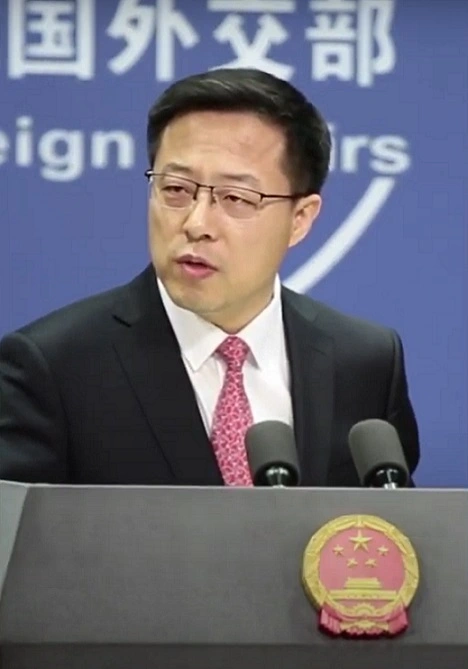
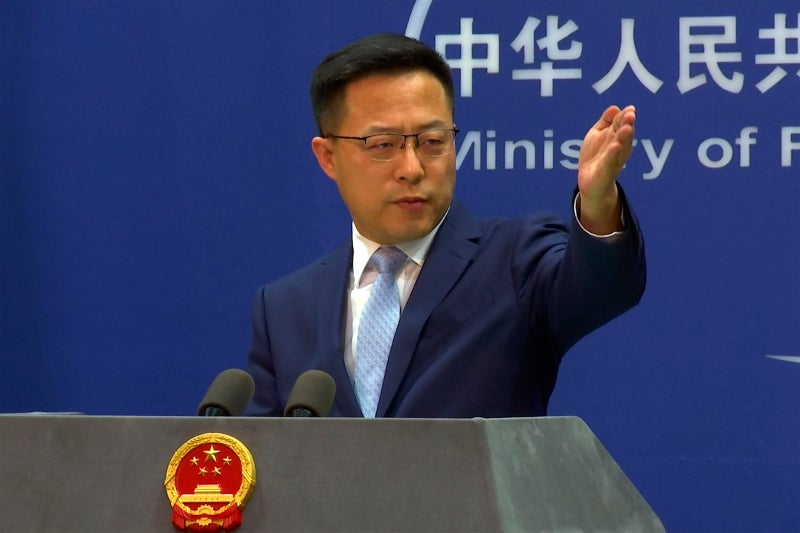
"China celebrates the election of President-elect Yoon Seok-yeol as South Korea's new president," a spokesman for China's Foreign Ministry said at a regular press conference on Tuesday. "We hope to promote healthy and stable development of bilateral relations with South Korea."
Contrary to the official stance, Chinese foreign policy experts are paying keen attention to what kind of policies Yoon will take when he mentioned China's strong opposition to the deployment of additional high-altitude missile defense systems and the quad.
Mainstream Chinese media, including Xinhua News Agency and CCTV, introduced Yoon's thoughts on "developing mutually respectful Korea-China relations," but the network of patriotic Internet media said that Yoon is considered "Korea's Trump." Chinese media "Peng Peng" said that President-elect Yoon is advocating strengthening the Korea-U.S. alliance, and introduced the analysis of Professor Wang Xiaok-ku of Jilin University that "Korea-China relations will face a relatively big challenge in the future."
Cha Hull, secretary general of the Center for International Public Opinion Research at the Chinese think tank, told the Dong-A Ilbo, "If Yoon joins the Quad, the relationship between Korea and China will deteriorate further than the THAAD situation." Cha said, "Third was a missile threat to North Korea, but Quad clearly intends to target China. If it is decided to join, China will impose strong sanctions such as restricting South Korean companies' access to the Chinese market and suspending trade." He also said, "With China set to form a new leadership at the 20th party convention this fall, the check on the public will be accepted as an attempt to obstruct and destroy it."
Former Global Times editor Hu Jintao pointed out on his social media that "Korea's trade with China is larger than the combined trade with the U.S., Japan and Europe," adding, "There is a possibility that Cheong Wa Dae will take a big step to reverse Korea-China relations."
Source of quotation:
I'm participating in the ranking.Please click and cheer for me.
China's expansion policy is a historical necessity - Japan is the only neighboring country that did not listen.
Japan is probably the only East Asian country that has been not under Chinese control.Prince Shotoku's personal letter, "The Emperor of the rising Sun send a letter to you who is Emperor of the sun set ". declared that Japan was not a subordinate country to China.The Huns, Sun Fei, Khitan, Yeojin, Manchuria, and Mongolia were a threat to the Han nationality, and the era of the 16th Kingdom of the Five Kingdoms was a time when many ethnic groups owned the country.The Sunbae people established the Sui and Tang dynasties, the Nujin and the Manchurians established the Qing dynasties during the King Jin dynasties.
Originally, China was conscious of the northern and western continents.In order to guard against foreign invasion, the capital was relocated from Xi'an to Beijing and the Great Wall was built.The Korean Peninsula has not shown its willingness to invade China.Although it was a subordinate country, it maintained its ethnic area as a country.Unlike nomads in the northern part of the peninsula, they settled down.Due to the small area of flat land and the lack of agricultural technology, the land is poor and the number of slaves is large.When the nomadic people eat up, they just move to the next place.At the opening ceremony of the Beijing Olympics, the video of foreigners praising China was the essence of China, and as a result of conquest, China now exists.
The identity of China itself in history was to conquest Asia.
Mongolia, which unified the northern peoples in the past, invaded China and established a Yuan dynasties.This is the time when China's expansionary policy is the most important.To the north, the Duchy of Novgorod and other major Russian states were under control, and to the west, Poland was attacked three times.As a result, Poland became a ruined country, although it originally withdrew its troops.During this period, the Goryeo dynasties collapsed on the Korean Peninsula and returned to their original rule.
Aggression to Japan was carried out as part of Yuan's expansionary policy.As a result, the Yuan army was destroyed and Japan maintained its independence after two attacks.Historically, China has a strong belief that Asian countries are under Chinese rule.This is because China was unified by conquering Asia.Only Japan is different.China has never beaten Japan in history.
Japan is a rare country that repelled this during China's expansion and defended its independence against Western colonialism.
His Majesty the Emperor's visit to China was greeted with a warm welcome - his visit to South Korea has not yet materialized.
Former General Secretary Deng Xiaoping, who came to Japan in 1978, became the first leader of the People's Republic of China to meet with the Emperor.Since then, the Emperor's visit to China has been the long-cherished wish of the Communist Party of China.After the death of Emperor Showa, the Tiananmen Incident occurred from Perestroika to the end of the Cold War.It was the Emperor's visit to China in 1992 amid China's worldwide isolation and international criticism.Foreign Minister Michio Watanabe, who accompanied him, asked Shanghai Vice Mayor Zhao Qizheng, "If many people go out on the street, will there be people throwing eggs at them?" Zhao replied, "That's not going to happen."On the contrary, there were many lines along the road, and the Emperor waved to each and every one of them and the train marched.
The countries where the 125th Emperor visited during his reign.
1991 Thailand, Malaysia, Indonesia
1992 China
1993 Belgium, Italy, Germany, Vatican
1994 United States, France, Spain, Germany
1997 Brazil, Argentina, Luxembourg, United States
1998 England, Denmark, Poland
2000 Netherlands, Sweden, Switzerland, Finland
2002 Poland, Hungary, Czech Republic, Austria
2005 Norway, Ireland, Saipan Island
2006 Singapore, Thailand, Malaysia, Thailand
2007 Sweden, Estonia, Latvia, Lithuania, United Kingdom
2009 Canada, Hawaii
2012 United Kingdom
2013 India
2015 Palau
2016 Philippines
2017 Vietnam, Thailand
Even if there is diplomatic relations between countries, if you think about what true diplomatic relations are for Japan, which has the Emperor, your visit can be one of the criteria for friendly relations.
His Majesty's visit to South Korea has not been realized.It goes without saying why.A fierce war with China resulted in many deaths on both sides.There are still many concerns, but at least the two countries have a long history.It is undeniable that both sides have overcome the problem and are moving forward little by little.
Is Japan-South Korea relations an extension of history?The friendly relationship between Korea and Japan, based on the fiction of a false history, collapsed with the advent of Moon Jae In.If anti-Japanese sentiment has declined due to his absence, what time should we return?
China's feelings toward Japan seem to be moving forward and backward, but it is clear that the two countries are completely different compared to China and Korea.
Will Xi Jinping's reform and opening-up policy continue to be revised in his third term? - There is no change in his ambition to unify Taiwan.
Xi Jinping's third term begins
Will the reform and opening-up policy continue to be revised?
Free industrial investment is essential for industrial growth
What is necessary to continue economic growth
No change in ambition to annex Taiwan
With the end of the Communist Party Congress and the start of Xi Jinping's third term, various reports have been made. Taken as a whole, it seems that the direction of revision of the reform and opening-up policy since Deng Xiaoping has been indicated. The results of Xi Jinping's economic policies are unclear in every sense, but it is clear that China's economy has grown due to the reform and opening-up path initiated by Deng Xiaoping, the partial introduction of market economic theory, and U.S.-China relations. Although Xi Jinping does not explicitly criticize these, what he is doing appears to be aiming for a return to the old style of Chinese socialism.
Although this is a country where individuals cannot own real estate, laws that allow individuals to buy and sell rented real estate are restricting growing real estate companies and forcing them into bankruptcy, and reining in the heads of growing companies like Alibaba. Does Xi Jinping think that these economic elements are a threat to China's socialist forces that were born on the path of reform and opening up? I have to say that his sense of being a threat is correct. This is because a liberal economy will destroy the socialist system.
In order for the economy to continue to grow, we must ensure as much freedom as possible. There are limits to simply investing in certain industries that the country has chosen as part of its national policy. A process in which these industrial investments are opened up to the private sector, private banks are free to make industrial investments, and private companies are free to commercialize services that have never existed before is an essential condition.
Various freedoms are essential for this, including freedom of speech, freedom of thought and belief, and academic freedom. This creates new social norms and new ways of living, which in turn leads to the creation of new products and services. Plants have a chance to flourish when they grow freely as intended.
Critics say that Xi Jinping has chosen stability over growth. What is worrisome, however, is that there has been no change to the ambition to unify Taiwan. Such restorationists are likely to advocate nationalism and wage wars of aggression. You can imagine this by looking at the current President Putin.
Japan that supported the Xinhai Revolution, Japan that protected the Last Emperor, and China that followed the West.
China's history is 72 years
Xinhai Revolution was carried out with support from Japan
The Last Emperor who sent donations for the Great Kanto Earthquake
Japan protected the exiled Puyi
Did China follow Sun Yat-sen's will
It is said that China has a history of 4,000 years, but that would be wrong. The People's Republic of China was established in 1949, so it is now 72 years old. At least since the founding of the Republic of China, it has been China, and Xi Jinping said at the 110th anniversary commemoration of the Xinhai Revolution that it is the People's Republic of China that will inherit Sun Yat-sen's will, but it is still 110 years old.
It is correct to say that human history has existed in what is now China for 4,000 years. Mainland China is an area where different ethnic groups founded various countries and then disappeared.
Sun Yat-sen was a person who learned about Japanese society and the Meiji Restoration when he defected to Japan, and succeeded in the Xinhai Revolution. They were supported by Japan's Takeshi Inukai and Toten Miyazaki. Sun Yat-sen said, ``Japan's Restoration was the cause of the Chinese Revolution, and the Chinese Revolution was the result of Japan's Restoration,'' and ``The two were originally connected to achieve the restoration of East Asia.''
In that case, wouldn't it be Sun Yat-sen and his supporters from Japan that created the current China?
It was Japan that supported the Xinhai Revolution, and Sun Yat-sen also inherited Japan's hopes for the restoration of East Asia.
Aixinjue Luo Puyi was the last emperor of China, the Xuantong Emperor, and is the so-called Last Emperor. After the Xinhai Revolution, Puyi made living in the Forbidden City a condition of his abdication. When Japan was struck by the Great Kanto Earthquake, Puyi announced that he would send donations to Japan, including a large amount of jewelry from within the Forbidden City.
Afterwards, the Beijing Coup occurred and Puyi was expelled from the Forbidden City, but Japan protected him. He approached Kenkichi Yoshizawa for protection through donations. Puyi was then protected by the Japanese concession of Tianjin.
After Japan's Kwantung Army conquered the Manchuria region, Puyi became the first emperor of Manchukuo. Although Manchukuo existed as a puppet government of Japan, Puyi lived as emperor again until the Soviet Union entered the war.
When thinking about who inherited Sun Yat-sen's will, it is not the People's Republic of China, assuming Sun Yat-sen's words, ``The two are originally connected as one and will achieve the restoration of East Asia.'' That's clear. The Chinese Communist Party is an anti-Japanese force, and current China is an anti-Japanese nation.
And even though China is in Asia, has it not sided with the West in its efforts to colonize Asia?
China sided with the West in World War II. The Potsdam Declaration was jointly signed by the United States, Britain, and China.
China's biggest weakness is its vast territory - We are dispersed - What is the biggest advantage of QUAD?
Advantages of the Japan-Soviet Non-Aggression Treaty
China continues to acquire underdeveloped countries
Japan at its limit along the first island chain
Make the most of the country's large land area
The biggest weakness is that the country is large
Threat to China is a deterrent
The Japan-Soviet non-aggression pact during World War II had benefits for both sides. The Soviet Union's weakness was its vast territory. If the Japanese army invaded from the east while fighting the Nazis in the west, the Soviet army would have no choice but to disperse and would have no choice. After the Nazis surrendered on May 7, the Soviet Union entered the war against Japan.
The image above shows China's archipelago strategy and its maritime route to Pakistan, known as the String of Pearls. Currently, the Spratly Islands are under control, Sri Lanka's Hampantota port has been leased to China for 99 years, and, strangely enough, a coup d'etat occurred in Myanmar and China has secured access to the Bay of Bengal by land. The Solomon Islands government has been taken over and has signed a security agreement with China, refusing to accept foreign naval vessels. It's just a stone's throw from Australia.
Japan is currently debating the defense of its first island chain. As long as Japan and Taiwan are protected, that's fine. That may be the correct answer in terms of national defense, but if China considers it difficult to capture the first island chain, it will simply put it off until later and steadily advance its maritime strategy to the west. The Chinese Communist Party gains power each time it acquires concessions, and it is unable to stop the relative increase in threats to Japan's national defense.
In other words, China is making the most of its vast territory and expanding its reach into surrounding areas. Will the countries threatened by China defend themselves with their own strength? In other words, the enemy is a mass of 14 billion people, and we are unaware that they are scattered.
The important point about QUAD, which was proposed by former Prime Minister Abe, is that it draws India in. If China and India clash in Kashmir, communist forces will disperse to the west. Military power is nothing more than a total number, and some people compare numbers and say things like that, but in this case it is meaningless. Could troops in Sichuan province participate in the invasion of Taiwan? China's biggest weakness is its vast territory.
China's maritime expansion is intended to be a game changer for the world. Simply defending the first island chain in order to counter this would be a completely different level of thinking. The theory of dividing China will only be effective on a scale that confronts China's global expansion. For China, the absolute threat of ``If you don't act, I'll surround you and tear you apart'' is itself a deterrent.