World's First Anti-Racism Bill - Proposed by Japan, a Permanent Member of the League of Nations.
2021-11-07
Category:Japan I'm participating in the ranking.Please click and cheer for me.
The Sino-Japanese and Russo-Japanese wars pushed Japan to the center of the international community
I wonder if Japan appears in world history around the time of the Sino-Japanese War. The world took note of the great accomplishments of the eastern island nation, and the West, which had considered China a great power, came to call China the ``sleeping lion.''
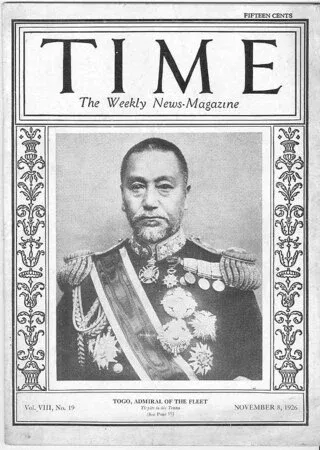
The next great achievement was the Russo-Japanese War. Heihachiro Togo, who won the Battle of the Sea of Japan, was featured on the front page of newspapers around the world, and is said to be the first Japanese person to be featured on the front page of a newspaper around the world. After that, Japan rose to the forefront of the world and became a permanent member of the League of Nations in 1919.
Japan was the first country in the world to call for the elimination of racial discrimination
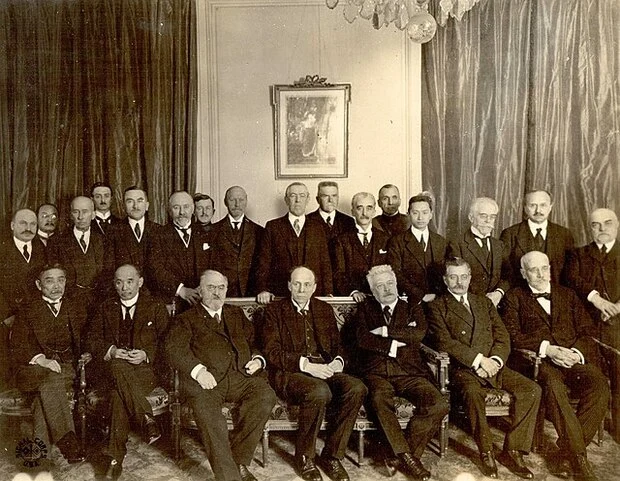
In 1919, Japan became the first country in the world to propose a bill to eliminate racial discrimination at the United Nations. Already during this period, Japan objected to the West's domination of Asia. Former Foreign Minister Nobuaki Makino criticized the racial discrimination caused by Western countries' colonies in various parts of Asia. (Nobuaki Makino: second from the left in the front row of the photo)
This is the world's first international organization to introduce a bill on the elimination of racial discrimination, with two representatives from France and two from Italy in favor, 11 from Greece, the Republic of China, Portugal, Czechoslovakia, the Kingdom of Serbs, the Kingdom of Croatia, Slovenes and Japan, and the United Kingdom against it. ・There were 5 people from the United States, Poland, Brazil, and Romania, so there was a majority in favor.
MEMO Many Japanese people think that the elimination of racial discrimination is a concept developed from the West, but in fact, it was Japan that first called for the elimination of racial discrimination.
Britain and America who made huge fortunes through the slave trade
At the time, Britain was abducting black people from Africa and trading them as slaves to the Americas. America used black slaves to grow cheap agricultural products and export them to countries around the world. The American representative argued that this was a no-go because it was not unanimous. Is there such a thing as a principle of unanimity among the 16 members?
Makino once objected, saying that the bill could be passed by majority vote, but the bill was rejected in accordance with the principle of unanimity in the United States, which was already a superpower at the time. This was nine years after the annexation of Japan and Korea and 22 years before the start of the Greater East Asia War.
South Korea denounces Japan as the Nazis of the East
South Korea continues to say that it was discriminated against and deprived of by Japan, but Japan was fighting in international organizations on a completely different scale. The annexation of Japan and South Korea and the annexation of Taiwan are assimilation policies that are completely different from Western-style colonies. Assimilation policy means that the Japanese, Koreans, and Taiwanese living there have equal rights and are subject to the rule of law.
The Greater East Asia War was a war between Japan and the white countries that ruled Asia, based on the idea that all Asian countries should maintain their independence and co-prosperity. The Greater East Asia Co-prosperity Sphere concept was not something that suddenly appeared on a whim.
POINT Korea claims that it suffered racial discrimination during the annexation of Japan and Korea, but it seems that they do not really understand what racial discrimination at that time meant.
I'm participating in the ranking.Please click and cheer for me.
How many natural resources are there in the waters near Japan? Possibility of Japan including EEZ.
Trauma of Japan, a country without resources
Japan's area is not small
Is Japan 52.4% of mainland China?
Rare earths, oil, these are just the beginning
Cabinet Secretariat “The Future of the Sea”
Are undersea resources a treasure trove to save Japan?
Japan is in a state where it can be said that marine resource development is almost untouched. As a country lacking in natural resources, it relies on foreign sources for many natural resources, including oil. During World War II, Japan was surrounded by ABCD as a country with no natural resources, and was in a situation similar to a food raid. They lost the war due to America's overwhelming amount of supplies. One cannot help but wonder why marine resource development did not progress after the war. Since we lost the war because we didn't have the resources, there may be many people who argue that searching for resources means starting another war, but this is a completely different story.
Japan's land area is 380,000 km2, ranking it 62nd out of 196 countries in the world. Japanese people tend to think of Japan as a small country because they tend to focus on top-tier countries such as the United States, China, and Russia, but Germany, Finland, and Poland are smaller in area. However, Japan is a maritime nation. When looking at the total of territorial sea, contiguous zone, and EEZ, Japan ranks 6th in the world in terms of ocean area with 4.47 million km2. And if you add the extended continental shelf, it is 4.65 million km2. If Japan's land area is added to this, the area that Japan can independently mine is 5.03 million km2.
China is covered by countries such as Japan and Taiwan, and there are few oceans that China occupies. That's why they dream of expanding into the ocean, but China's land area is 9.6 million km2, and in fact, including the sea, Japan has about 52.4% of mainland China. is. Because China has a large land area, natural resources and oil are mined. However, Japan's seabed resources are still unknown.
In 2018, researchers from Waseda University and Tokyo University discovered that hundreds of years' worth of global demand for rare earths, which are essential for manufacturing precision equipment, is found on the ocean floor around Minamitorishima in the Ogasawara Islands. This was discovered through the team's investigation. A research team from Ibaraki University and Hokkaido University has announced that one of the world's largest oil fields may lie dormant off the coast of Ibaraki Prefecture's Goura coast in 2020.
Cabinet Secretariat Ocean Policy Headquarters Secretariat “The Future of the Sea” Excerpt
The Basic Law on Ocean Policy was enacted in April 2007 and came into effect in July of the same year. The Basic Law on Ocean Policy outlines the basic philosophy of harmonizing the development and use of the ocean with the conservation of the marine environment, as well as the responsibilities of the national and local governments. It also stipulates that a Basic Ocean Policy Plan be established approximately every five years, and that the Ocean Policy Headquarters, headed by the Prime Minister, be established in the Cabinet. The current Basic Plan on Ocean Policy, which was approved by the Cabinet in April 2013, clarifies ``the vision of Japan as a maritime nation'' and sets out initiatives that should be prioritized in light of changes in the social situation regarding the ocean. and indicates the direction of ocean-related measures. It also specifically describes the efforts that the government should comprehensively and systematically implement over a period of approximately five years in the 12 areas specified as "basic measures" in the Basic Act on Ocean Policy. The existence of energy and mineral resources such as oil, natural gas, methane hydrate, and submarine hydrothermal deposits has been confirmed in Japan's territorial waters, EEZ, and continental shelf, and the possibility of Japan becoming a resource superpower is hidden.
The 2007 Basic Law on Ocean Policy was formulated during the first Abe Cabinet, and Japan's exploration of seabed resources went into full swing. What if Japan becomes a resource-rich nation? I would never have thought of that. Because Japan is a small country... No. There is a high possibility that there will be a breakthrough in undersea exploration. There may come a time when Japanese people don't have to work so hard.
The two - party system that is possible in Japan would be better if the Liberal Democratic Party was split into two - the opposition party would not become the ruling party.
Democratic government described as a nightmare
How much power should be given to the opposition party
What should a two-party system look like?
Republican policies and Democratic policies
Two-party system with the ability to govern
In the run-up to the House of Councilors election, when considering a two-party system that is possible in Japan, the media immediately talks about the need to develop an opposition party to compete with the Liberal Democratic Party, but based on painful experience under the previous Democratic Party administration, Japanese people are fed up with that story. Former Prime Minister Abe described the Democratic Party of Japan as a "nightmare government."
The Democratic Party of Japan, which gave up power after three years, subsequently fell apart and fell apart, but Japanese voters still had high expectations for the party, even for a certain period of time, when it came to the surprise of a party that split into pieces due to divisions among its ranks. He was appalled and regretted being appointed to the national government. So what is the current political party support rate? The opposition party only has an approval rating of around 5% at best. (Reference: Public opinion poll | Nippon Television)
I even wonder how much time we need to spend in the Diet against such an opposition party in the name of democracy. They were elected in their constituencies, but as a political party they can hardly be considered to represent the people.
Despite this, they do whatever they want under the pretext of monitoring the ruling party, and their activities only end up stalling the Diet by asking questions no different from those of weekly magazine reporters. .
Is it really possible to have a two-party system in Japan? There is an opinion that it is not true democracy if there is no change of government, and that is probably correct. However, the most serious problem is not that there is no other political party in Japan capable of managing the government other than the Liberal Democratic Party. So when will the opposition party grow? This year marks 77 years since the end of the war.
I've been saying for some time that it would be a good idea to split the Liberal Democratic Party into two, but most people give me strange looks. But guess what? The Liberal Democratic Party has a wide range of swings from left to right, which means it is a party with a wide range of defense. That is why it continued to be the ruling party for a long time after the war.
And in the last Liberal Democratic Party presidential election for Reps. Kishida, Takaichi, Kono, and Noda, a section of the public did not miss that this structure was clearly appearing and disappearing, but the media did not report on this structure.
Former Prime Minister Abe developed Abenomics in an effort to ease regulations, lower corporate taxes, improve the competitiveness of companies, raise gross output, increase employment, and induce inflation. Using the United States as an example, the policy will likely be more Republican.
Prime Minister Kishida has said that he would energize the middle class, and has advocated for growth rather than distribution, which is a rather left-wing position, which in American terms could be called a Democratic Party-like position.
In other words, this would be fine. The Liberal Democratic Party could be divided into two major parties, the right and the left, and the people could decide which policy is needed now, taking into account the domestic situation at the time, and then change the government. This is a healthy two-party system. What is currently taking place as a competition between factions within the Liberal Democratic Party will be exposed to the vote of the people by separating it into a political party..
Even though the Liberal Democratic Party already covers a wide range of policies from both the right and the left, opposition parties that stray outside of that range are often talking about policies that are not realistic in the first place. We have experienced this under the Democratic Party administration. What became strange was that they tried to leave the matter to the opposition party under the pretext of a two-party system. The problem is that the opposition parties have a modest number of seats.
The government cannot be entrusted to any party other than those that have the ability to become the governing party. No matter what ideals or ideologies, if they are imperfect planes, they will crash.
It may no longer be true that opposition parties support a healthy democracy. What is needed is a political party with the ability to take charge of the government and be responsible.
Before colonial rule or international law, bilateral commitments must be fulfilled.This is international common sense.
Was colonial rule legal or illegal at that time?History shows that.This is because there was no law or concept to ban colonies.Although not well known, Japan was the first country in the world to submit a bill to abolish racism in 1919.The attempt failed just before it was passed, and the United Nations Declaration on the Elimination of All Forms of Racism in 1965 had to wait.
There is a saying that the origin of international law is Hugo Grotius' Law of War and Peace, but he is a playwright and poet.It would be impossible to establish international law without international organizations.In a country governed by law, how does international law work now that police power can be controlled?What is the International Court of Justice?It is only after the two countries with disputes appear in court.If the other country does not appear in court, it will not work at all.
There is no police in the United Nations to crack down on the world, and the International Court of Justice will be held with the consent of both countries.
What the United Nations can do now is limited, saying it violates international law.Sanctions cannot be imposed without unanimous agreement among permanent members.The only thing that can be done is economic sanctions.How, then, can the two countries keep their promises?It is written in a treaty between the two countries, and if the treaty is deemed invalid, one country can unilaterally impose sanctions.
The South Korean government is clamoring for Japan's violation of international law and international law, but let's take a look at the Japan-South Korea Basic Treaty.The Japan-South Korea dispute resolution exchange document states, "The dispute between Japan and South Korea will be resolved through mediation in accordance with the procedures agreed upon by the two governments."What is mediation?It will now be the International Court of Justice.Even if the Japanese government invites them to the International Court of Justice, the Korean government will not respond.It remains the same as before and now that bilateral treaties should be observed before international law.
In principle, the commitments between the two countries are fulfilled by the two countries.It is clearly stated that the dispute resolution between Japan and South Korea should be resolved through mediation.
Public opinion without examining Abenomics - there is no point in criticizing it based on contradictory premises.
There are some surveys and opinions in public opinion that Abenomics has ruined Japan, but is that true? First of all, what is Abenomics? Were you asking people who answered the same question as in the poll, or were you asking people you didn't know? I wonder if asking someone I don't know will give me the results I expected. First, let's review the three arrows of Abenomics.
Three arrows of Abenomics
Bold monetary policyFlexible fiscal policyGrowth strategy to stimulate private investment
Monetary policy is still ongoing, but former Prime Minister Abe has said that the consumption tax increase was decided in advance and was carried out at a time when it could not be postponed, so he was unable to fire a second arrow. In other words, Abenomics is actually the first arrow in a variety of environments. In other words, I would understand if there was an evaluation of the fact that it did not advance to the second stage, but I have doubts about evaluating Abenomics itself.
Next, I will list some of the achievements of Abenomics.
Main achievements of Abenomics
The total national and local tax revenue will reach a record high of 107 trillion yen in fiscal 2019, up from 78.7 trillion yen in fiscal 2012. The stock price, which was around 8,000 yen, rose to over 24,000 yen under the Abe administration. Public pension investment profits increased by 57.6 trillion yen in seven and a half years. The effective job opening ratio was 83 job openings for every 100 people in 2012, and 164 job openings for every 100 people in 2019. Business operators improved their treatment due to the labor shortage. The minimum hourly wage rose from 749 yen in 2012 to 901 yen in 2019. The rate of children from single-parent households going on to university increased significantly from 23.9% to 41.9%.
Sanaenomics (Japanese Economic Resilience Plan) will be published. Representative Sanae Takaichi announced a policy to carry on Abenomics during the last presidential election.
Sanaenomics three arrows
Financial easingFlexible fiscal stimulus in times of emergencyBold crisis management investment/growth investment
What they have in common is that monetary easing policy will continue, and if the Takauchi Cabinet is elected, the government will implement aggressive fiscal policy.
The fact that the Japanese government's balance sheet was introduced for the first time in 1995 means that the Japanese government did not have the concept of strategic investment, which companies take for granted. How can you invest without a balance sheet or cash flow statement? It was only a matter of being able to compare the income and expenditure for a single year, or the previous year. The term "primary balance" has come to be used like crazy. At that time, Japan believed that deregulation would revive the economy, and the government repeatedly took the approach of relaxing regulations through legal revisions.
As a result, the Japanese government was unable to rebuild the national economy or make strategic investments for economic growth after the collapse of the bubble, which was an unprecedented economic crisis. More than 30 years have passed since we stubbornly closed the doors. Then, companies moved their manufacturing sectors to emerging countries, and GDP and tax revenues mainly went to neighboring countries such as China, creating a dual wage structure of dispatched labor in order to prevent an increase in the number of unemployed people in Japan. . The economic disparity that arose from this process is said to be one of the causes of the current declining birthrate.
So, has Abenomics ruined Japan? Would that also mean denying Sanaenomics? Or will we continue to turn down investments from the government as we have been doing, paying close attention to the primary balance under the guidance of the Ministry of Finance and listening to the beautiful words of fiscal consolidation? The point of contention should be to gather opinions on whether or not bold fiscal spending by the government is necessary. In any case, regardless of whether the policy is better or not, there are parts where it seems like the point at issue is not policy at all, but just an extension of a personal attack, which is unfortunate.
After the tragic death of former Prime Minister Abe, Japan will carry out Abe's will and amend its constitution - calling for the unity of the Liberal Democratic Party.
Election activities, security issues
One SP for each former prime minister?
Other former prime ministers who have not been seen since leaving office
Mr. Abe continued his activities with light security
Restrict Korean sovereignty
What Abe wanted to achieve
Former Prime Minister Abe was killed by a bullet, and it has been difficult for him to sort out his feelings, but it seems that public opinion is starting to sort itself out somehow. The current situation is targeting the Nara Prefectural Police in the area where former Prime Minister Abe gave a speech. Naturally, if the police had questioned the perpetrator beforehand, or there was a gap of several seconds before the second shot was fired, I myself wonder why the SP could not have arrested him during that time. I also thought about it.
However, when we piece together information that has been reported, it appears that in Japan, after the prime minister retires, there will be one SP. It is speculated that the Nara Prefectural Police, who were in charge of the election speech that day, were providing security for normal campaign activities. And if you look at the video, you can see it in a 360-degree open state. It would be difficult to provide security in a 360-degree open space. If it is at least 180 degrees, it is limited to the front, left and right, but even then it seems impossible to completely defend with one SP and regular prefectural police.
In other words, does this mean that former Prime Minister Abe went to support candidates in the House of Councilors election in an environment where he could not defend himself even if someone killed him if he had that intention? Therein lies the essence of the problem. Normally in Japan, after a prime minister resigns, he is rarely seen, and his political activities are rarely reported in the media. I don't know if the reason is that security is getting thinner at each level, but that's what happened to successive prime ministers. Considering the danger to myself, that might be the normal thing to do. But Abe was different.
Former Prime Minister Abe's reason for resigning as Prime Minister was due to worsening of his chronic ulcerative colitis, but after getting better with medication, he began energetically supporting Liberal Democratic Party members for the future of Japan. He even created a YouTube channel and will be cheering for Liberal Democratic Party candidates in the House of Councilors election. This is despite the fact that they are only given the security mentioned above. Considering this, it can be said that Mr. Abe continued to enthusiastically engage in political activities even though his life was in danger.
I don't know where public opinion will conclude this issue, but my honest feeling is that this is a direct attack on Japan's democracy and an incident that has destroyed the spiritual pillars of the Japanese right. We cannot retreat even one millimeter against this attack. Former Prime Minister Abe is a politician. His earnest wish was to amend the Constitution. If we are to mourn his death, he must accomplish this.